YOGA
The Origins of Vinyasa Yoga and Its Benefits

What is Vinyasa Yoga?
Whether you're stepping onto a mat for the very first time or you've been flowing for years, Vinyasa is one of the best places to experience what makes yoga so transformative.
Vinyasa yoga is a dynamic style of yoga in which movement is synchronized with the breath. Rather than holding poses for extended periods of time, practitioners flow continuously from one posture to the next, creating a moving meditation. Every inhale and exhale guides a transition, making the breath the foundation of the practice.
The word vinyasa comes from the Sanskrit words vi, meaning "in a special way," and nyasa, meaning "to place." Together, the term is often interpreted as "to place in a special way," referring to the intentional sequencing of postures. In modern yoga, "vinyasa" describes both a style of practice and the flowing transitions that connect poses together.
Unlike more structured yoga systems with a fixed sequence, such as Ashtanga Yoga, Vinyasa classes are highly creative. Teachers have the freedom to design unique sequences, meaning no two classes are exactly alike. Some classes are slow and meditative, while others are athletic and fast-paced, but all emphasize the relationship between movement and breath.
This practice is known for its fluid movement, breath-led pacing, and creative sequencing. Vinyasa has become one of the most popular styles of yoga. But beyond the sweat, it's a practice rooted in centuries of yogic philosophy that invites you to connect with your body, quiet your mind, and return to the present moment.
The Origins of Vinyasa Yoga
Although Vinyasa has become one of the world's most popular contemporary yoga styles, its roots stretch back thousands of years.
The philosophical foundation of yoga originates in ancient India, with teachings found in sacred texts such as the Vedas, the Upanishads, and later, the Yoga Sutras of Patanjali. These early traditions focused primarily on meditation, ethics, and spiritual liberation rather than the physical postures many people associate with yoga today.
The flowing style practiced in modern studios developed much later. In the early twentieth century, Tirumalai Krishnamacharya, often referred to as the "father of modern yoga," began teaching a dynamic, breath-centered approach to movement. His teachings profoundly influenced yoga as it is practiced today.
Several of Krishnamacharya's students went on to establish influential schools of yoga. K. Pattabhi Jois developed Ashtanga Yoga, a rigorous system of fixed sequences linked by breath. Because Ashtanga emphasized continuous movement between postures, it became the direct inspiration for what we now recognize as Vinyasa Flow.
As Vinyasa spread throughout the United States during the late twentieth century, teachers began adapting Ashtanga's flowing principles into more flexible, creative classes. Instead of following one prescribed sequence, instructors created original flows while maintaining the central philosophy of connecting breath with movement.
The Benefits of Vinyasa Yoga
It's easy to think of Vinyasa as just another workout, but its benefits extend far beyond building strength or breaking a sweat. By synchronizing movement with breath, Vinyasa supports physical fitness, mental clarity, and emotional well-being all at once.
1. Builds Functional Strength
Vinyasa engages nearly every major muscle group through bodyweight movements like Plank, Chaturanga, Warrior poses, and balancing postures. Rather than isolating individual muscles, the practice develops functional strength, helping your body move more efficiently in everyday life.
2. Improves Flexibility and Mobility
Because every class combines strengthening with stretching, Vinyasa helps increase flexibility while also improving joint mobility. Over time, muscles become more supple, movement feels more fluid, and your body gains a greater range of motion.
3. Supports Heart Health
Many Vinyasa classes maintain a steady, continuous pace that gently elevates your heart rate. This creates cardiovascular benefits similar to moderate-intensity exercise while remaining lower impact than activities like running.
4. Enhances Balance and Coordination
Standing balances and flowing transitions challenge your stability, strengthen smaller supporting muscles, and improve proprioception, your body's awareness of where it is in space. Better balance benefits everything from athletic performance to everyday movement.
5. Reduces Stress and Anxiety
One of Vinyasa's greatest strengths is its ability to calm the nervous system. By focusing on your breath and the present moment, the practice can help reduce stress, quiet mental chatter, and create a greater sense of calm long after class ends.
6. Improves Focus and Mindfulness
Moving with intention requires concentration. Instead of thinking about what's occurring outside of the mat, Vinyasa encourages you to stay fully present, strengthening mindfulness and inward connection.
7. Encourages Better Breathing
Breath is at the center of every Vinyasa practice. Over time, learning to breathe deeply and intentionally can improve lung capacity, increase endurance, and help regulate the body's stress response in daily life.
8. Creates a Mind-Body Connection
Perhaps the most meaningful benefit of Vinyasa is the relationship it builds between body, breath, and mind. As you become more aware of how you move and how you feel, you begin carrying that awareness beyond the yoga mat into everyday life.
We love Vinyasa because it reminds us that movement can be both empowering and grounding. Every flow is an opportunity to build strength, cultivate presence, and reconnect with yourself, one breath at a time.
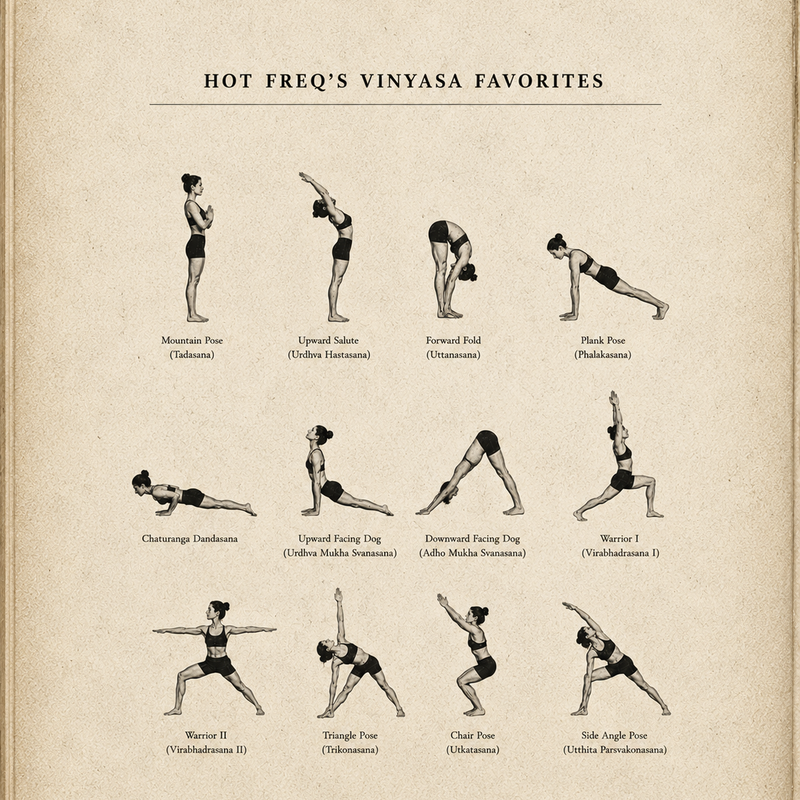
Classic Vinyasa Staples To Know
While every teacher sequences differently, there are several postures and transitions you'll find in many Vinyasa classes. Here's a few that you can expect when entering your first Vinyasa class:
-
Sun Salutations (Surya Namaskar)
-
Downward-Facing Dog
-
Plank Pose
-
Chaturanga Dandasana
-
Upward-Facing Dog or Cobra
-
Warrior I
-
Warrior II
-
High Crescent Lunge
-
Triangle Pose
-
Half Moon Pose
-
Chair Pose
-
Tree Pose
-
Child's Pose
-
Savasana
These poses are connected through the breath, creating the continuous flow that gives Vinyasa its signature rhythm.
How to Get Started
Starting Vinyasa doesn't require flexibility, expensive equipment, or prior experience. All you really need is a yoga mat and a cute outfit, cough cough.
If you're new to the practice, don't worry about memorizing every pose. Focus instead on your breathing. Listen to your teacher, move at your own pace, and remember to just pay attention to your own mat.
The beauty of Vinyasa is that it meets you exactly where you are. Every class is an opportunity to learn something new about your body, your breath, and yourself.
At HOT FREQ, we believe yoga is about more than movement. It's about creating space to reconnect with yourself and build community.